California Looks to Waves and Tides as Next Frontier for Clean Power
A new state law orders a feasibility study of ocean-movement energy, even as experts say the technology is still about a decade from commercial readiness.
By Amy Swan ·
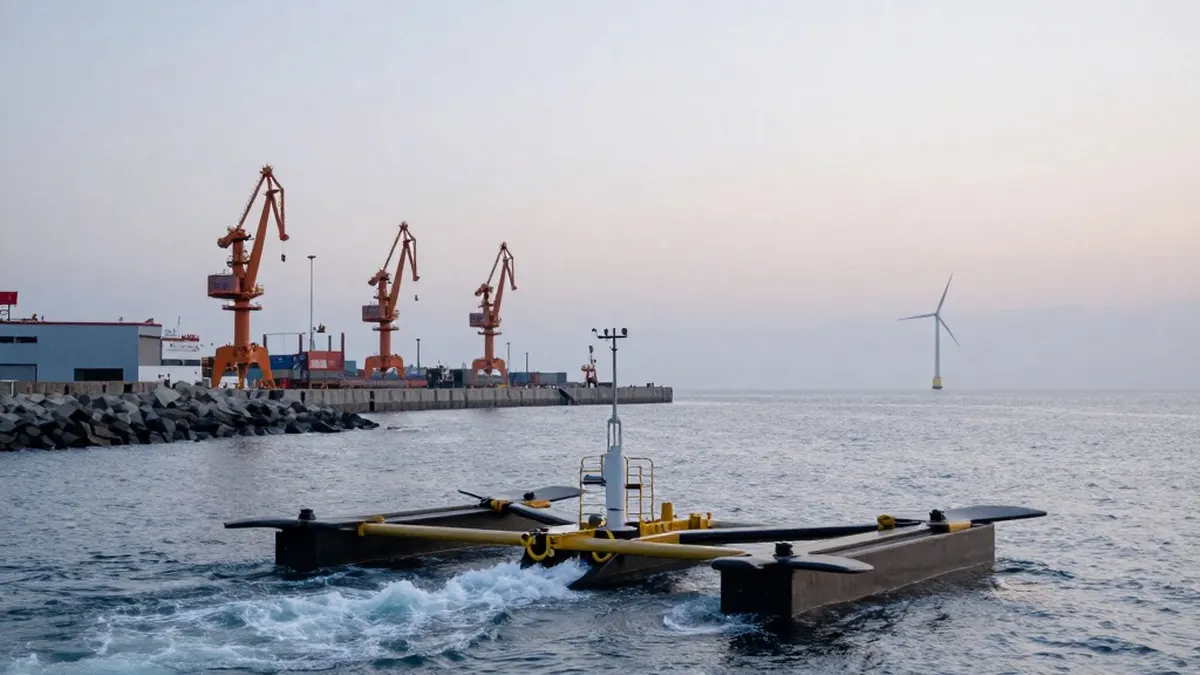
California is weighing whether the motion of the sea could help power its grid. A law Gov. Gavin Newsom signed in October directs state agencies to examine the feasibility and effects of generating electricity from waves and tides and to report to the Legislature by January 2025.
The move comes as the Pacific off California grows busier. Nearly 600 square miles of ocean have already been leased for floating wind farms, with more expected. Supporters of so-called blue power hope the new industry can help fill gaps as the state works toward an all-renewable electric grid by 2045.
Public investment has trailed interest, however, and the technology needed to make projects efficient, affordable and durable in punishing sea conditions is still being developed. A handful of small demonstration projects have been launched off the West Coast, but none has supplied commercial power to the grid. The California Energy Commission's latest projections through 2045 include no wave or tidal power.
Tim Ramsey, marine energy program manager at the U.S. Department of Energy's Water Power Technologies Office, said marine energy has developed more slowly than other sources. "We are kind of where land-based wind was 20 or 30 years ago," he said. He described the work as expensive and complex, and estimated the industry is "a decade away" from building devices that can last 20 to 30 years at sea.
The resource is sizable. The National Renewable Energy Laboratory estimated that wave and tide energy available in the U.S. with current technology equals 57% of 2019 domestic energy production. The federal budget for ocean wave energy in fiscal year 2023 is $123 million, according to Ramsey.
State Sen. Steve Padilla, a Chula Vista Democrat who wrote the bill, said the sector has "great potential" but has progressed slowly because lawmakers have focused elsewhere, including on offshore wind. The Energy Commission, which will lead the study, declined to comment, saying its work has not begun.
Local efforts are under way. AltaSea, a research center on a 35-acre campus at the Port of Los Angeles, is assembling a wave project. Its CEO, Terry Tamminen, a former state environmental secretary who helped write the law, said wave energy has been overlooked amid "irrational exuberance" for offshore wind. He said tenant Eco Wave Power, whose floating arms drive hydraulic pistons, could have a commercial installation within two years. The planned demonstration at a wharf in the L.A. harbor will not generate significant power, he said.
Tidal power is a less likely prospect for the state. Jason Busch, executive director of the Pacific Ocean Energy Trust, said Washington has deep bays and estuaries better suited to funneling water through turbines. Elsewhere, the Navy runs a wave test site in Hawaii, and PacWave off Newport, Oregon, plans a grid-connected test next year featuring San Diego-based CalWave, after an 11-year permitting process. Individual devices can cost $10 million to design and build, and Busch warned that early firms that overpromised went bankrupt.
Experts say marine power could prove versatile even if it supplies modest amounts: charging vessels and research equipment, serving remote communities, or powering desalination. Open questions remain about effects on marine animals and shipping. "I think the potential is so enormous," Ramsey said, adding that he hopes the U.S. leads in solving the cost challenge.
Source: LAist