Experts say parents should not strictly limit Halloween candy
A dietitian at Northwestern Medicine advises that moderation, rather than hard rules, is the best approach for children's sugar intake during the holiday.
By Camila Wisniewski ·
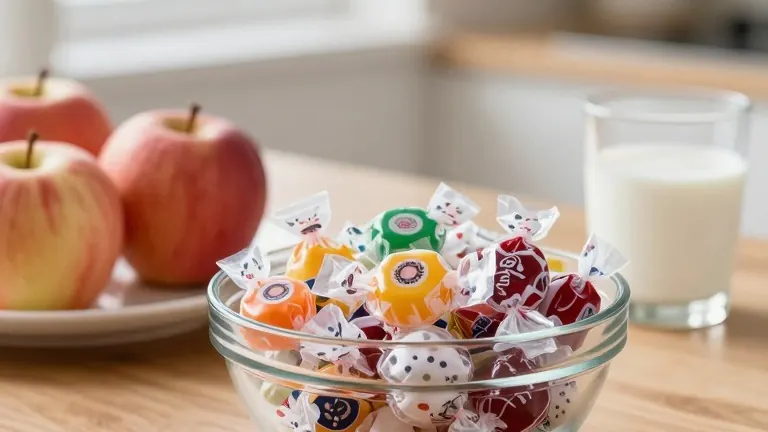
Northwestern Medicine advises parents to focus on moderation rather than strict limits when distributing Halloween candy.
Megan Meyer, an advanced registered dietician at Northwestern Medicine, stated that candy is a standard component of the holiday. She noted that parents should not treat the treat as an anomaly in a child's diet. Instead, she suggested using the occasion to model healthy eating habits. This approach involves viewing food without strict labels of good or bad. Meyer emphasized that candy can fit alongside nutrient-dense meals.
Meyer recommended a specific method for families. She suggested allowing children to select two or three pieces of candy. These treats should then be eaten as part of a meal. This practice demonstrates that sweet foods are part of a balanced diet. It shows that moderation exists within a day's nutrition. Meyer explained that this method gives children autonomy over their choices. It prevents candy from becoming a reward for eating other foods.
The dietitian stated there is no single correct number of candy pieces for any child. She described the final amount as a matter of parent discretion. The key, she said, is allowing kids to enjoy their selected favorites. This method helps maintain a neutral view of food. It avoids creating a hierarchy where certain foods are viewed as superior to others.
While Meyer emphasized flexibility, she identified one metric parents should monitor. She pointed to the sugar content of the treats. The American Association of Pediatrics recommends a specific daily limit for added sugar. For children two years of age and older, the recommended amount is 25 grams or less per day. Meyer noted that this guideline helps manage total intake without eliminating the holiday treat.
Meyer concluded by framing sugar as a normal part of the holiday weekend. She described it as a fun element of a healthy eating lifestyle. The recommendation centers on integrating the candy into existing meal structures. This method supports the idea that enjoyment and nutrition can coexist. The guidance relies on parental judgment rather than a fixed numerical cap on individual pieces.
Parents are encouraged to apply this advice during the upcoming holiday. The focus remains on the relationship between food and enjoyment. Meyer's guidance suggests that limiting the quantity is less important than the context in which the candy is consumed. The primary goal is to maintain a balanced perspective on sweet treats.
Source: NBC Chicago