Tesla Scraps Cybertruck for Australia and New Zealand After Seven-Year Wait
The electric pickup maker voided thousands of regional reservations, citing the high cost of converting the vehicle to right-hand drive for a market where sales are slowing.
By Chinedu Okafor ·
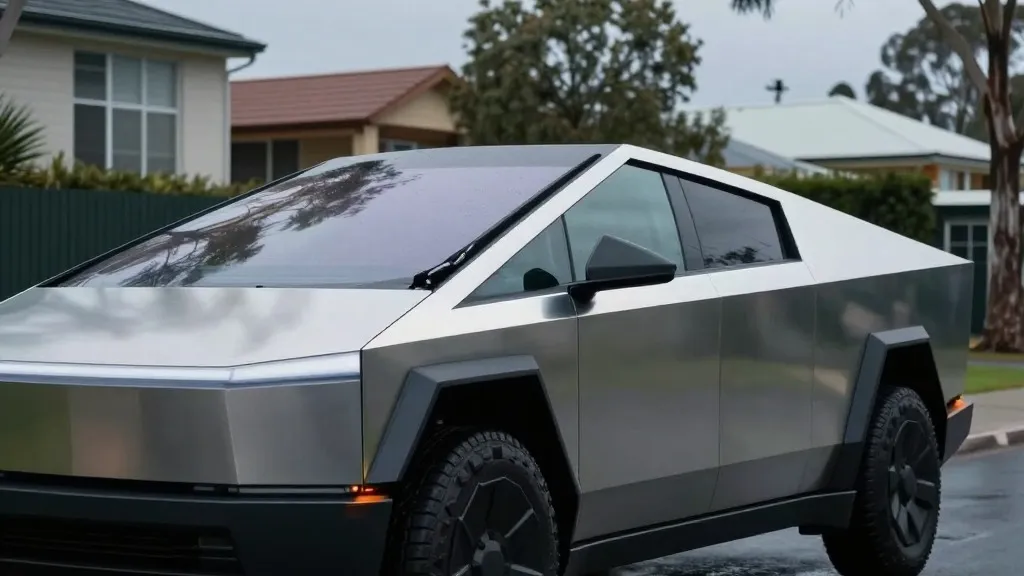
Tesla has officially terminated its plans to sell the Cybertruck in Australia and New Zealand, a decision that ends a seven-year cycle of deposits and delayed promises for customers in the region. The move confirms that the electric pickup will remain a left-hand-drive-only product, effectively locking out major right-hand-drive markets including the UK and Japan.
The cancellation was communicated to reservation holders via email earlier this week, stating that production plans for the region have been discontinued. Customers who placed deposits as early as November 2019 are being told their orders are void. Tesla promised full refunds within 30 days, a financial settlement for a wait that began when Australians started paying A$150 to reserve the vehicle nearly seven years ago.
The core financial hurdle preventing the truck’s arrival in the region is the cost of re-engineering the vehicle for right-hand drive. Australia and New Zealand require vehicles to be certified under specific local design rules, a process that demands significant investment. For a product line that is already facing demand headwinds in North America, the expense of adapting the platform for just two markets with a combined population of approximately 33 million is difficult to justify.
Market data suggests the volumes do not support such an investment. In the third quarter of 2026, Tesla delivered only 8,295 units in the 'Other Models' category, a segment that now consists almost entirely of Cybertrucks since production of the Model S and Model X ceased. Estimates place Cybertruck sales at between 7,000 and 8,000 units for that quarter, translating to an annual pace of roughly 30,000 units. This stands in stark contrast to the 250,000-unit annual capacity of the production line built for the truck.
The timing of the announcement, coming one day after Tesla reported its third-quarter 2026 earnings, underscores the strategic pivot. The company is attempting to convert dead Cybertruck reservations into sales of vehicles it actually builds for right-hand-drive markets. As a consolation, Tesla is offering a free one-year subscription to its Full Self-Driving (Supervised) software for reservation holders who opt to purchase a new Model 3 or Model Y instead.
Australia was never a small market on paper. Crowdsourced surveys from 2020 indicated that the region held approximately 3% of all global Cybertruck reservations, ranking third behind the United States and Canada. By 2023, total global reservations were estimated at around 2 million units. However, Tesla quietly closed the Australian reservation page in May 2022, replacing it with a button to 'get updates' without issuing refunds at the time, leaving customers in a state of limbo for four years.
In 2024, CEO Elon Musk told shareholders that the company might certify the truck for other markets 'sometime next year.' That year passed without a right-hand-drive version appearing. The delay highlighted a growing disconnect between the vehicle's North American launch and its international potential. The truck has been blocked in the European Union primarily due to pedestrian safety regulations, further limiting its global footprint.
The international rollout of the Cybertruck has been restricted to left-hand-drive markets. Deliveries began in South Korea in late 2025 and the UAE in January 2026, followed by configurator launches in Saudi Arabia, Qatar, Jordan, and Israel. This pattern reinforces the idea that the truck is becoming a niche, predominantly American product. Tesla is unlikely to invest further in expanding the vehicle's hardware capabilities for new regions, focusing instead on finding buyers for the existing left-hand-drive inventory.
For the thousands of Australians who held deposits, the outcome was predictable, if not entirely welcome. Many reservation holders had likely already canceled their pre-orders, given that the 2023 production model differed significantly from the original 2019 promise of a $39,900 price tag. The current model is more expensive and offers less range than initially advertised. With US sales dropping from approximately 39,000 units in 2024 to a fraction of that today, paying a premium for an imported version in Australia would have offered poor value for money.
The cancellation marks a clear shift in Tesla's international strategy for its electric pickup. By abandoning the Australian and New Zealand markets, the company is prioritizing cost efficiency and liquidity over market expansion for a specific product line. The refunds will flow out within the next month, closing a chapter that began with high hopes and ended with a strategic retreat from the right-hand-drive world.
Source: Electrek