European Port Workers Strike Over Arms Shipments and Pay
Unions in six countries joined a coordinated action affecting over 100 ports, citing military logistics and labor conditions.
By Camila Wisniewski ·
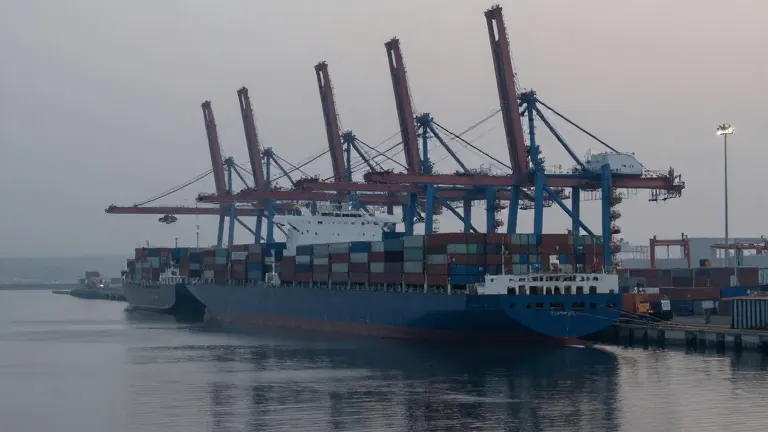
International port workers across Europe and beyond initiated a coordinated labor action on Friday to address military logistics and workplace conditions. The movement involved unions from France, Italy, Greece, Spain, Turkey, and Morocco, all demanding an end to the use of harbors for military transport.
A joint statement from the participating unions stated that ports should not serve as transit points for weapons, ammunition, military equipment, or troops. The document explicitly declared that dockworkers do not work for war. Organizers reported that more than 100 ports in various nations joined the protest. This participation could disrupt operations in parts of Europe, the Mediterranean region, and North America.
In Greece, unions called for a stoppage at Piraeus, the country’s largest port. A separate strike by sailors regarding wages, safety, and working conditions kept ships docked at several locations. This action interrupted ferry services. Giorgos Gogos, president of the Piraeus Port Authority Dockworkers’ Union, said the workers did not want their ports to become centers for military material used to kill people.
Protests also took place in Turkey and Italy. Demonstrators gathered outside the Haydarpasa port in Istanbul under a banner opposing war and armaments. In Italy, the Unione Sindacale di Base indicated protests were planned in key hubs including Genoa, Trieste, and Gioia Tauro. These actions coincided with a national general strike aimed at addressing high prices and other economic issues. The Italian government ordered transport workers to return to duty, which reduced expected disruptions in the transportation sector.
French unions, specifically the CGT’s port and dock federation, organized a one-day stoppage in major ports such as Le Havre, Marseille, Dunkerque, and Rouen. The federation opposed what it termed the militarization of port facilities under European policies. It also criticized French government budget proposals that it claimed threatened social protections. The scale of the mobilization varied, with participation ranging from full-day strikes to shorter stoppages and demonstrations.
C.H. Robinson, a supply chain management firm, advised clients that operational interruptions and shipment delays were possible. The company noted that the impact would vary depending on the specific port, terminal, and participation level. Experts generally predicted a limited effect on the global supply chain. Marcus Baker, head of global maritime transit at Marsh, stated that a 24-hour strike was unlikely to cause substantial disruption to world trade flows, though perishable goods and urgent shipments could be affected. He noted that the action added complexity to supply chains already strained by Middle East tensions, climate events, restrictions on the Rhine and Panama Canal, and changing tariffs.
Judah Levine, head of research at the shipping platform Freightos, warned that the stoppage could worsen congestion in ports like Genoa. Ships in that area already faced waits of one to two days for berths. Ed Anderson, a supply chain management professor at the University of Texas at Austin, indicated that a total shortage was unlikely due to the short duration of the protest.
Source: Pioneer Press