Federal letter to California clerk lists 46 names, not the 47 claimed in its demand
Butte County elections chief Keaton Denlay says a Department of Justice package contained a flawed spreadsheet and a 48-hour deadline to verify citizenship for voters.
By Camila Wisniewski ·
A federal letter sent to a California county elections office contained 46 names, not the 47 claimed in the document's summary, according to the official who received it. The discrepancy was part of a larger set of errors in a package delivered by the Department of Justice during the final weeks of the midterm elections.
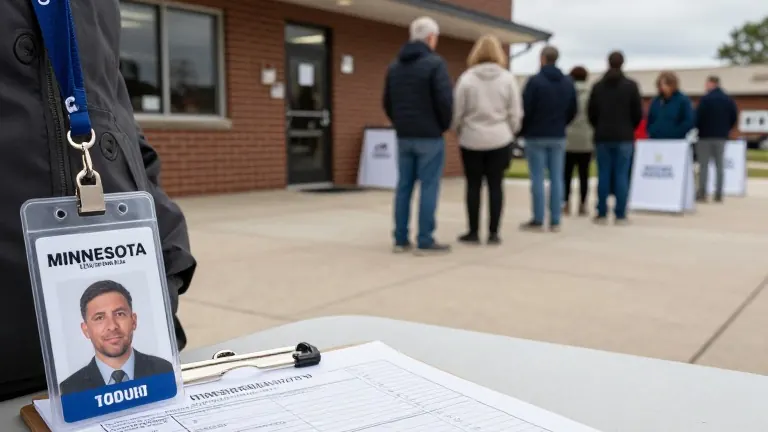
Keaton Denlay, the clerk-recorder and registrar of voters for Butte County, located north of Sacramento, received the paperwork at approximately 3:30 p.m. on Friday. A person identifying himself as an agent from the Department of Homeland Security brought the materials to Denlay's office. The package included a demand letter, two declarations, and a two-page list of names. Denlay noted that the letter misspelled his surname as Danlay.
The demand letter described the list as containing 47 likely aliens who were unlawfully registered. It requested additional details, such as social security numbers, for each person on the list. The document instructed the county to set aside ballots from anyone whose citizenship could not be confirmed, though not cancel them, until their status was settled. The letter established a 48-hour deadline for this process. It warned that officials who knowingly count ballots from identified noncitizens risk becoming aiders and abettors to a federal crime.
Denlay stated that the physical list did not align with the letter's description. The two pages were identical copies of the same list. The document contained 46 names rather than 47, with one name appearing twice. Of the 45 distinct names, 32 were not on Butte County's active voter rolls and had never been sent ballots. Another seven names lacked sufficient information, such as a full name, address, date of birth, or license number, to be checked against county records. This left only six names that might have been ineligible according to the federal list.
In a statement posted on the county website, Denlay cited California law, which places the burden on a challenger to provide extraordinary proof of the validity of the challenge at the time it is made. He wrote that the Justice Department did not meet this burden due to the list's inaccuracies and lack of detail. Denlay said he never received a digital copy of the spreadsheet or further contact from the department. He reviewed the records personally to allow his staff to focus on election duties.
In an interview on Wednesday, Denlay called the federal threats absurd and said he was not losing any sleep over the matter. He described his reaction to the letter as a rollercoaster of emotions. He explained that he had to take a claim of fraud from a purported federal agent seriously but found there was no actionable information in the package.
The incident is part of a wider effort by the Justice Department. The department has alleged that 20,000 California voters are likely noncitizens and has sued to stop those ballots from being counted. State officials reject the claim, stating the data is unreliable and that the federal government lacks the authority to intervene in this manner. A federal judge reviewing the lawsuit has criticized department leaders for making public statements that threaten to charge election officials.
Other counties received similar letters. Francisco Diaz, the registrar of voters in San Benito County, said his office received a list of 33 names. He found that some individuals were not registered in his county. Diaz said his office would not be intimidated by agents with guns for simply doing their jobs. In Orange County, the registrar did not initially see the letter because it was delivered to the clerk-recorder, an office that handles marriage licenses and property deeds rather than elections.
The letter was signed by Eric Grant, the US attorney for the eastern district of California. Lauren Horwood, a spokesperson for his office, declined to comment on Denlay's statement. A spokesperson for the Department of Homeland Security did not respond to an inquiry. Legal experts have said the threats appear designed to intimidate and that California officials acted lawfully in declining to comply.
Source: The Guardian