NASA Shifts Lunar Landing Strategy to High-Earth Orbit
The space agency has revised its Artemis roadmap, moving the critical docking phase for SpaceX's Starship closer to Earth to streamline the path to a 2028 Moon landing.
By Jasmine Coleman ·
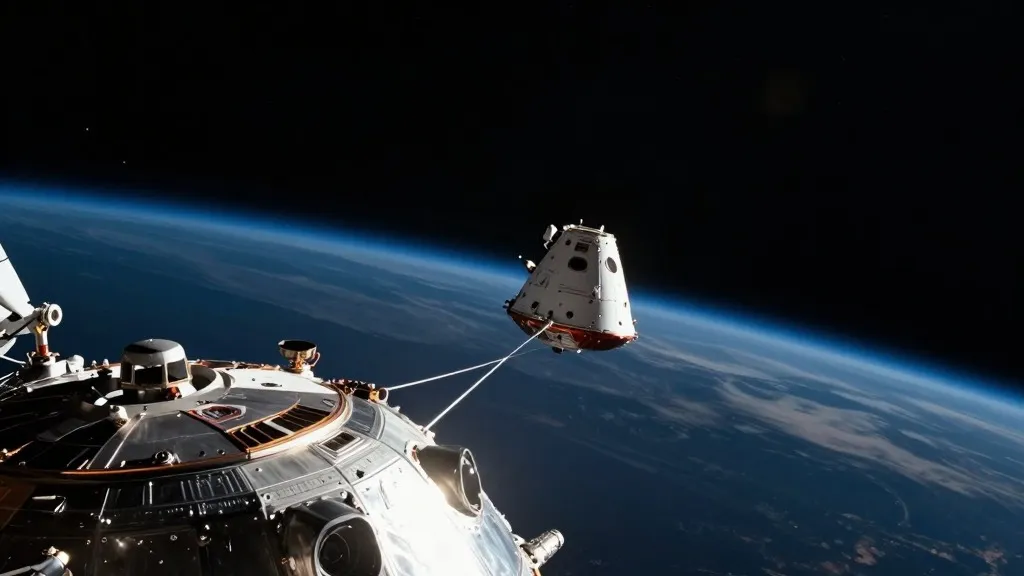
NASA has officially moved the critical docking phase for its lunar lander candidates to high-Earth orbit, a significant architectural shift designed to simplify the logistics of returning humans to the Moon. During a detailed briefing on Friday, agency officials outlined a revised plan that departs from previous configurations, aiming to clear up long-standing technical hurdles for both SpaceX and Blue Origin. This update marks the first time the full scope of these changes has been laid out publicly, confirming that the agency is restructuring its approach to meet aggressive timeline targets.
The most substantial alteration involves SpaceX’s Starship vehicle. Under the new framework, the Orion spacecraft will no longer dock with the Starship lunar lander in the complex near-rectilinear halo orbit around the Moon. Instead, the two vehicles are now slated to connect in high-Earth orbit before beginning their transit to the lunar surface. This change directly addresses a major engineering challenge that had persisted for years, effectively resolving the issue by removing the energy-intensive requirements of the previous orbital maneuvering.
For Blue Origin, the revised architecture presents a different set of parameters. The plan now involves four separate launches of the New Glenn rocket, notably eliminating the need for in-space refueling between spacecraft. Furthermore, the design allows for the possibility that Blue Origin’s Blue Moon lander will rendezvous with the Orion crew module in low-Lunar orbit, rather than in higher trajectories. These adjustments appear to simplify the mission profile for the Blue Origin team, reducing the complexity of the staging process required to reach the surface.
Despite the architectural tweaks, the timeline remains ambitious. NASA officials stated they still anticipate launching Artemis III, a demonstration mission involving docking with both the Blue Moon and Starship vehicles near Earth, by the summer of 2027. Following that, the agency is tracking toward a 2028 launch for Artemis IV, which would mark the actual crewed landing on the lunar surface. These dates have not changed, even as the underlying mechanics of the missions have been overhauled.
NASA Administrator Jared Isaacman emphasized the agency's confidence in the new path, asserting that the organization possesses the mandate, resources, and stakeholder support necessary for execution. He described the current trajectory as an achievable path, signaling a decisive push to accelerate progress rather than retreat. This stance suggests that the agency views these changes not as a delay, but as a necessary correction to ensure the program’s viability.
The shift in strategy follows the earlier decision to cancel the Lunar Gateway project earlier this year. That cancellation inadvertently solved a key problem for SpaceX, which had requested the removal of the requirement to dock in the near-rectilinear halo orbit due to the high energy costs and technical difficulties associated with it. By moving the docking to high-Earth orbit, NASA has aligned the mission architecture with the capabilities of the current lander designs.
While the new plan offers a clearer route, questions remain about the feasibility of holding the 2028 date. The agency has taken a hard look at every element of the Artemis Program, seeking changes that help the lunar lander companies execute their plans more effectively. However, the gap between planning and execution in deep space remains a significant hurdle, and the success of this new approach will depend on how quickly these revised procedures can be tested and validated.
Source: Ars Technica