Tesla Builds Own Maps to Fix FSD Flaws
Tesla is developing an internal mapping system to address persistent errors in speed limit recognition and routing for its Full Self-Driving software.
By Yasmin Farouk ·
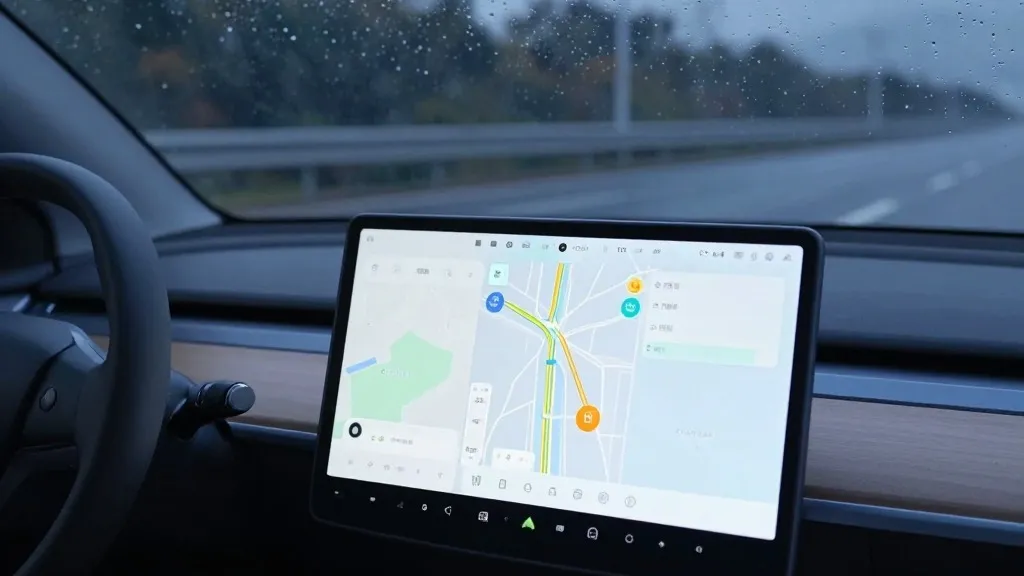
Tesla has reversed a long-standing stance by announcing it is building its own maps to correct frequent errors in its Full Self-Driving system. The company’s head of AI, Ashok Elluswamy, detailed this strategy during the Q3 2026 earnings call. This move directly addresses common complaints from drivers, specifically regarding the system’s inability to accurately read speed limits, handle parking, and select appropriate routes.
The decision marks a significant departure from previous leadership rhetoric. For years, CEO Elon Musk argued that self-driving systems relying on detailed maps were brittle and inefficient. He famously dismissed high-precision lane maps as a "huge mistake" in 2019, suggesting that cameras and AI were sufficient for driving anywhere. Now, Tesla is effectively admitting that its vision-only approach requires additional data to function reliably.
The initiative was prompted by a question from a retail investor during the shareholder Q&A. The investor noted that mapping remains a core issue for FSD and asked why Tesla relied on third-party data instead of its own. Elluswamy agreed that the company should not depend on external maps. He explained that Tesla is developing a new AI-based architecture that learns from the collective fleet. This system will also incorporate individual driver preferences and respond to voice commands.
Implementation is expected to begin with FSD version 15. This update will initially handle the start and end of trips. Over the coming months, the new mapping layer will take over navigation, parking, and destination management. The goal is to reduce reliance on external data sources and improve the system's understanding of the driving environment.
Recent data highlights the need for this improvement. Last month, a Belgian road safety group reported that FSD exceeded speed limits in 55% of 30 km/h zones in Brussels. The vehicles averaged 44 km/h, often because the car’s display showed an incorrect 50 km/h limit. In the United States, the NHTSA is considering an investigation into claims that Tesla Robotaxis speed through active school zones. These incidents underscore the limitations of the current vision-only model.
This approach brings Tesla closer to the methods used by competitors like Waymo. Waymo maps cities using sensor-equipped vehicles before launching services and updates those maps continuously. Tesla is now using a similar fleet-based data collection model. While Tesla does not use lidar, its cars gather visual data to build a map that improves driving performance across the network. This strategy aligns with Tesla’s current Robotaxi operations, which run in small, geofenced areas rather than open highways.
The shift suggests that vision alone may not be enough to solve complex driving tasks. By creating its own map, Tesla is leveraging its large fleet to generate the precise environmental data its AI needs. This internal map will likely become more detailed over time, potentially evolving into a high-precision tool that supports the company’s broader autonomous driving goals.
Source: Electrek