UK Draft Rules Value Grid-Export Tech at £4,000 Per Car
A closed government consultation proposes credits for bidirectional charging, a move critics say could let manufacturers sell more petrol models while cutting EV targets.
By Amanda Delgado ·
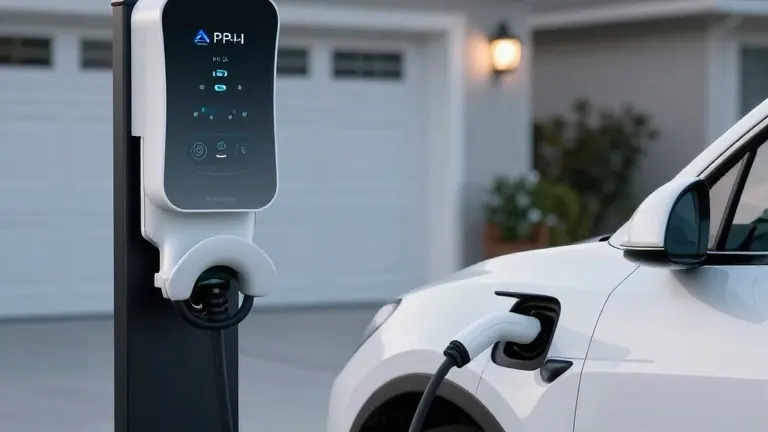
The UK government has closed a consultation that proposes giving carmakers a financial credit of approximately £4,000 for installing vehicle to grid, or V2G, technology in electric vehicles. This measure is part of a wider review of the zero-emission vehicle mandate, which is preparing to lower sales targets for electric cars. The credit would allow manufacturers to sell additional petrol models without facing fines for missing those targets.
The proposal aims to accelerate the adoption of bidirectional charging, which enables drivers to automatically charge their vehicles when electricity is cheap and sell power back to the grid during periods of high demand. By turning vehicles into storage units, the technology could help balance the grid when wind and solar generation drops. Officials suggest this could reduce the need for expensive gas power plants to fill supply gaps. The National Energy System Operator forecasts that V2G capacity could reach 1.2 gigawatts by 2030 and 41 gigawatts by 2050, a level sufficient to meet more than a quarter of peak energy demand.
Industry groups and environmental advocates have raised concerns about the structure of the incentive. Ben Nelmes, chief executive of the thinktank New AutoMotive, argued that manufacturers should only be rewarded if the technology is actually used by drivers, not merely for installing it. He noted that the proposed credit value significantly exceeds the hardware cost and that few drivers currently own the specialized chargers required to access the system. Nelmes stated that the current plan risks benefiting carmakers' shareholders rather than the drivers and billpayers who would use the technology.
Vicky Edmonds, chief executive of the Electric Vehicle Association England, described the timing as premature. She pointed out that while millions of electric vehicles are on the road, only a fraction of owners are currently using V2G or storage technologies. Edmonds said consumers are still focusing on immediate concerns such as vehicle purchase costs, charging expenses, and daily range. She argued that granting credits for a technology not yet tested at scale effectively allows manufacturers to sell fewer electric vehicles while the market is still stabilizing.
The debate comes as environmental groups brace for changes to the ZEV mandate that could result in an additional 147 million tonnes of carbon emissions by 2050. Some drivers already participate in similar schemes through providers like Octopus Energy in the UK, Renault in France, and BMW in Germany. Octopus Energy has claimed that participants in its service could save £620 a year. The government will now assess the feedback from the consultation, which ended on Friday, as it finalizes the rules for the next phase of the electric vehicle transition.
Source: The Guardian
More Business · Rip-Off Report · Report a business · Got a Story?