76,000 student drop drives Chicago school board closure debate
Chicago Public Schools enrollment has fallen by 76,000 over the past decade, prompting 45 board candidates to debate whether to close or merge underutilized schools.
By Amanda Delgado ·
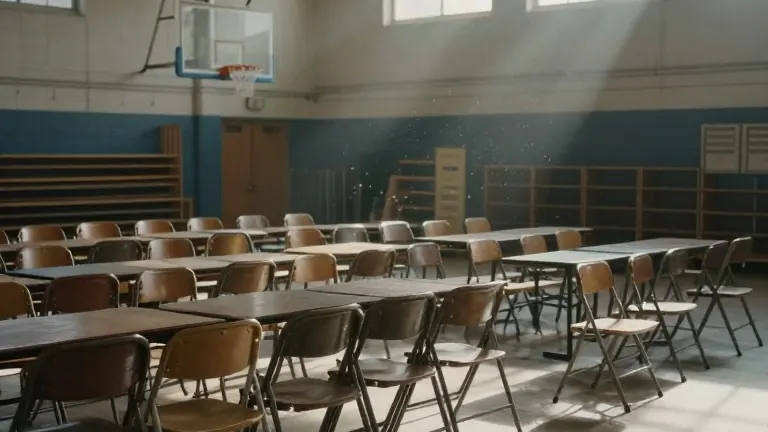
Chicago Public Schools has lost 76,000 students over the past decade. This enrollment decline is forcing 45 school board candidates to confront a politically sensitive issue that officials avoided for years: the potential closure of underutilized schools.
About a dozen of the candidates said they would support some closures or mergers. They argue that schools with very low enrollment cannot provide rich academic, extracurricular, or social opportunities for the students who remain. This shift marks a departure from the political toxicity surrounding the 2013 closures, when 50 elementary schools shut down in a single year.
Data from the district shows that more than 140 of its roughly 500 schools use less than half of their available space. Of those, 43 schools are less than one-third full. These underutilized campuses are concentrated in roughly half a dozen of the city's 20 school board districts. Critics note that the district's utilization measure is imprecise, yet officials continue to rely on it for planning.
In district 6b on the South Side, Pastor Michael Neal is running for the board. His district includes 25 district-run schools, 15 of which operate at less than half capacity. Three are less than one-third full. Neal and his opponent, attorney Brittany Kimble, both said they would consider some school mergers in a candidate questionnaire. Kimble described closures as a true last resort that requires significant community engagement and thoughtful transition planning.
Neal argues that the debate centers on the student experience. He noted that his grandson started prekindergarten in the district this fall and needs access to challenging classes and social activities. Many severely underenrolled campuses struggle with high absenteeism and limited offerings. Neal also supports extending the district's closure moratorium, which expires next summer, to allow more time to address enrollment trends.
Opposition to closures is strongest among candidates backed by the Chicago Teachers Union. They argue that closing schools destabilizes predominantly Black neighborhoods, disrupts learning, and increases gun violence. Instead of shutting doors, these candidates propose filling vacant space with outside facilities such as health clinics, food pantries, or grocery stores. They contend that historic disinvestment, rather than low birth rates, drives enrollment loss in many areas.
Hilario Dominguez, the union's favored candidate for school board president, stated that underenrollment discussions often target Black and brown students in neighborhoods that deserve more investment. He and other candidates have questioned whether the district faces a true enrollment emergency. Dominguez called the term underutilized schools a phrase used to undermine the district.
The district has attempted to address these issues through its Sustainable Community Schools program. This initiative partners 20 high-poverty schools with nonprofits to expand services. Since 2018, these schools received an extra $500,000 annually, along with federal COVID-19 aid. Despite this funding, enrollment grew at only three of the 20 schools. The other 17 lost students at a sharper rate than the district overall, with 13 losing more than a quarter of their enrollment.
Shannon Bennett, executive director of the Kenwood Oakland Community Organization, joined the union's call to extend the closure moratorium. He cited research showing academic disruption from the 2013 closures and an uptick in gun violence near vacant buildings. Bennett rejected the idea that better community engagement would change outcomes in these communities. He described closures as a nonstarter for local residents.
David Stovall, a professor of Black studies at the University of Illinois Chicago, said candidates are not discussing underenrollment enough. He opposes large-scale closures but believes some campus mergers are necessary after years of inaction. He noted that keeping severely underenrolled schools open does not serve students well. Stovall argued that those questioning the crisis are missing the point, stating that the situation is not going to get any better.
Source: Block Club Chicago